Współ-inteligencja. Człowiek + AI = nowy sposób myślenia

1. Główna idea: „Współ-inteligencja”

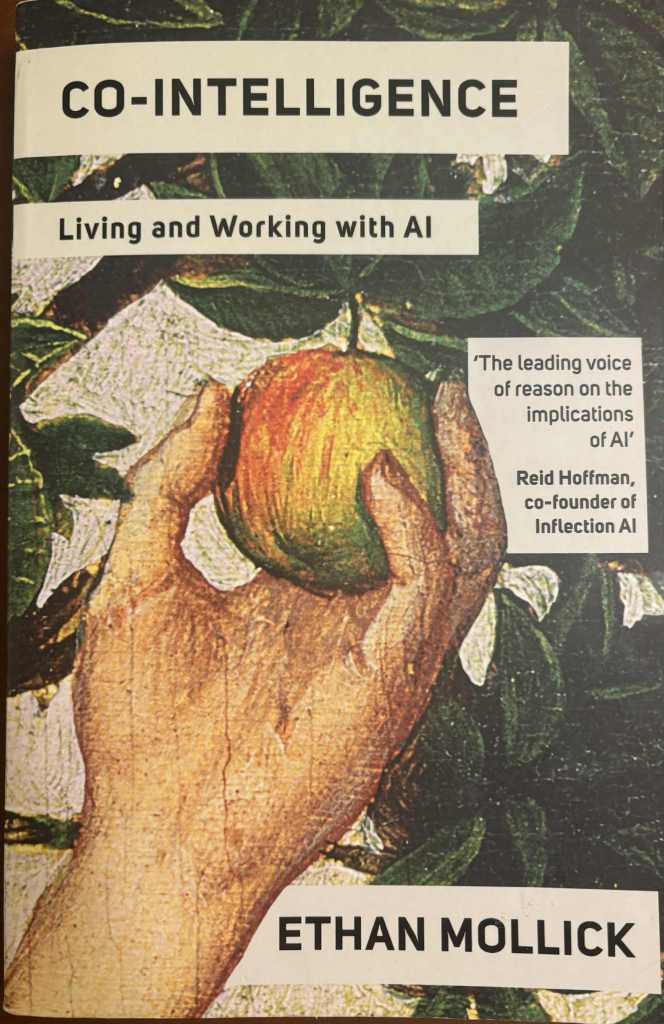
Ethan Mollick w swojej książce Co-Intelligence: Living and Working with AI proponuje nie patrzeć na AI (sztuczną inteligencję) jako na rywala, ale jako na partnera w myśleniu i działaniu — stąd pojęcie co-intelligence (współinteligencja).
Kilka kluczowych punktów:

  • Współczesne systemy generatywnej AI, zwłaszcza modele językowe („large language models” – LLM), działają w sposób niezwykły: przetwarzają ogromne zbiory tekstów, uczą się wzorców językowych i pomagają nam generować nowe teksty, pomysły, analizy.
  • AI to jak „obcy mózg” („alien mind”) – coś, co nie myśli jak człowiek, ale może z nami współpracować. Tę metaforę Mollick wykorzystuje, by podkreślić: musimy nauczyć się żyć i działać z tym „obcym”
  • W efekcie chodzi o stworzenie nowego stylu pracy i uczenia: człowiek + maszyna, każdy wnosi to, co najlepiej potrafi. AI przejmuje pewne zadania, człowiek trzyma stery, nadzoruje, decyduje.
Uczeń-kucharz: jak AI naprawdę się uczy

  • Mollick używa genialnej metafory: uczeń-kucharz.
    Wyobraź sobie młodego kucharza, który chce zostać mistrzem.
    Ma spiżarnię pełną składników (czyli weights – wagi, których w ChatGPT jest 175 miliardów), ale kompletnie nie wie, jak ich używać.
  • Przed nim miliony przepisów (teksty z Internetu, książki, artykuły). Uczeń zaczyna próbować.
    Miesza, łączy, myli się, poprawia. Z czasem odkrywa, że jabłka pasują do cynamonu, a kmin do kawy już nie.

Z każdą próbą jego spiżarnia staje się bardziej uporządkowana, aż pewnego dnia zaczyna gotować dania, które naprawdę mają smak.

  • To właśnie etap pre-trainingu — uczenia bez nadzoru człowieka (unsupervised learning).
    AI obserwuje wzorce, zależności, rytm języka, aż zaczyna pisać spójnie i naturalnie.
    Ale uwaga: to wciąż uczeń bez zrozumienia. Umie powtórzyć przepisy, ale nie wie, dlaczego smakują dobrze.

Pre-training i jego cienie

  • W tej fazie AI pochłania ogromne ilości tekstów — publiczne, naukowe, czasem również te objęte prawem autorskim.
    Nie kopiuje ich, lecz przekształca w matematyczne wzorce — tzw. wagi, które mówią jej, jak prawdopodobne jest, że słowa wystąpią razem.
    To tworzy nową, trudną granicę między nauką a prawem, inspiracją a własnością.
  • Mollick pisze, że dobre dane mogą się skończyć już za kilka lat. Firmy będą musiały nauczyć AI uczyć się z mniejszej ilości treści — albo tworzyć dane samodzielnie.
  • I tu pojawia się paradoks: AI uczy się z ludzkiej kultury, ale nie tworzy jej znaczeń. Jest jak papuga, która zbudowała bibliotekę cytatów, ale nigdy nie przeżyła ani jednej emocji z tych książek.

Fine-tuning — lekcje z ludzkiego feedbacku

  • Kiedy AI już „ugotuje” danie, człowiek musi je spróbować.
    To etap fine-tuningu — czyli uczenia z pomocą ludzi.
    Eksperci czytają odpowiedzi AI, oceniają je („👍” lub „👎”), a model uczy się, jakie formy i tony są pożądane.

To proces zwany RLHF — Reinforcement Learning from Human Feedback.

  • W ten sposób AI zaczyna nabierać smaku – rozumieć, że nie każda odpowiedź dobra statystycznie jest dobra społecznie.
    Że można mówić poprawnie, ale nieodpowiedzialnie.
    Że nie wszystko, co się da wygenerować, powinno zostać wypowiedziane.

2. Cztery zasady współ-inteligencji

Mollick przedstawia cztery podstawowe reguły, które pomagają efektywnie współpracować z AI.

  1. Zawsze zaproś AI do stołu („Always invite AI to the table”). Eksperymentuj, sprawdzaj: „czy w tym zadaniu AI może pomóc?” — bo jeśli nie spróbujesz, nie poznasz granic (tzw. „jagged frontier”).
  2. Bądź człowiekiem w pętli („Be the human in the loop”). Oznacza to: nie odchodź od nadzoru — AI może sugerować, ale decyzje i odpowiedzialność są po stronie człowieka.
  3. Traktuj AI jak osobę (ale jasno zakomunikuj, jaką osobą) („Treat AI like a person — but tell it what kind of person it is”). Czyli: ustaw kontekst, persona, rolę dla AI; dzięki temu efekty mogą być lepsze.
  4. Zakładaj, że to najgorsze AI jakie kiedykolwiek użyjesz („Assume this is the worst AI you’ll ever use”). Technologia rozwija się błyskawicznie — to, co dziś jest najnowsze, jutro może być przestarzałe.

Te zasady warto pamiętać szczególnie w edukacji, w pracy, w uczeniu się — bo pomagają uniknąć fałszywego przekonania, że AI zastąpi człowieka lub że wystarczy „klikać i patrzeć”.

3. Uczenie się, edukacja i rola AI

  • Mollick podkreśla, że podstawowe umiejętności i wiedza faktograficzna wciąż są kluczowe — zanim zaczniemy korzystać z AI, powinniśmy mieć solidne fundamenty. Bez nich trudno zauważyć wzorce, wyłapać błędy, zrozumieć kontekst.
  • W edukacji AI może pełnić role: tutora (indywidualna pomoc, dostosowanie się do ucznia) i trenera/coacha (wsparcie w rozwoju umiejętności, analiza, feedback) — Mollick omawia te role jako część części drugiej książki.
  • Przykład: architekt-student, który co tydzień spotyka się z ekspertem vs. drugi student, który po każdym projekcie otrzymuje natychmiastowy feedback od AI — ten drugi może robić więcej iteracji, szybciej uczyć się.
  • W edukacji tradycyjny model (nauczyciel przekazuje, uczeń odbiera) musi ewoluować. AI może przejąć część pracy — np. dostarczanie materiału, powtórki — a nauczyciel może skupić się na tym, co najludzkie: wyjaśnianie, prowokowanie pytań, mentoring.

Gdzie AI może mieć ograniczenia w edukacji

  • AI mogą halucynować: generować odpowiedzi, które brzmią przekonująco, ale są nieprawdziwe — więc uczniowie muszą nauczyć się weryfikować, krytycznie myśleć.
  • AI nie zastąpi całkowicie ludzkiego nauczyciela: feedback, emocje, relacje, motywowanie — te elementy pozostają silnie ludzkie. Mollick sugeruje, że nauczyciel-mentor jeszcze bardziej zyskuje na znaczeniu.
  • Uczenie „jak pisać zapytania (prompt-engineering)” to nie wystarczy. Książka zauważa, że kluczowe jest nie tylko umiejętność „składania promptu”, ale rozwijanie krytycznego myślenia, świadomości zadania i kontekstu.

4. Różne role AI

Mollick wyróżnia kilka „persona” AI: jaką może pełnić rolę w naszym życiu zawodowym, edukacyjnym, twórczym.

  • AI jako osoba („AI as a person”) — czyli kiedy przypisujemy mu cechy, rolę eksperta, wspólnika. Użyteczne, jeśli wiemy, jak ją skonfigurować.
  • AI jako kreatywna siła („AI as a creative”) — generowanie pomysłów, twórcze kombinacje, wsparcie w procesie tworzenia. Jednocześnie: nie wszystko, co wygeneruje, będzie wartościowe.
  • AI jako współpracownik („AI as a coworker”) — w pracy: automatyzacja pewnych zadań, wsparcie analityczne, szybkie wersje robocze, ale człowiek dalej ma przewagę w wyborze, kierowaniu, ocenianiu.
  • AI jako tutor („AI as a tutor”) — w edukacji: zadania dostosowane, feedback, wsparcie indywidualne; ale z zastrzeżeniem kontrolowania jakości i nie oddawania całej interakcji maszynie.
  • AI jako coach („AI as a coach”) — w rozwoju umiejętności, w karierze: co mogłoby pójść źle? co mogę zrobić lepiej? – AI może stawiać pytania, proponować scenariusze, zmuszać do refleksji.

5. Wagi: co wynika dla uczenia się, edukacji, rozwoju?

  • Uczenie się w erze AI oznacza przejście od pamiętania do rozumienia i tworzenia — skoro AI może pomagać w generowaniu faktów, to my musimy skupić się na umiejętnościach wyższego rzędu: krytycznym myśleniu, dyskusji, kreatywności.
  • Edukacja powinna uwzględniać integrację AI w procesie, nie tylko je blokować. Uczniowie powinni uczyć się „jak współpracować z AI”, a nie tylko „jak go unikać”.
  • Nauczyciele i trenerzy powinni stać się bardziej projektantami procesów uczenia się, mniej tylko przekazującymi wiedzę, a bardziej umożliwiającymi współdziałanie człowieka i maszyny.
  • W rozwoju zawodowym: osoby, które nauczą się wykorzystywać AI jako współpracownika, będą miały przewagę — ale nadal kluczowe pozostaje, by człowiek pozostał w roli decyzjodawcy, kreatora, nadzorcy.
  • Trzeba być świadomym ograniczeń AI — czyli że AI może wprowadzać błędy, może być „za dobre”, popaść w pułapkę automatyzacji bez refleksji — odbierając nam to, co najcenniejsze: ludzką perspektywę.

6. Gdzie AI „nie jest dobre” – czyli ograniczenia AI

  • AI często halucynuje — generuje błędne lub zmanipulowane informacje, bo nie „rozumie” świata, tylko przewiduje słowa.
  • AI może być nadmiernie pewne siebie — brzmi „mądrze”, ale nie zawsze jest to prawda. Wymaga więc weryfikacji przez człowieka.
  • AI nie ma świadomości, wartości, intencji — choć może symulować osobowość, to jednak nie jest człowiekiem. Trzeba uważać, by nie nadawać mu cech, których nie ma.
  • AI nie zastąpi w pełni ludzkich relacji, motywacji, intuicji — w edukacji oznacza to: nie redukujemy nauczyciela do maszyny; nie likwidujemy rozmowy, zrozumienia, wspólnego procesu.
  • AI może zmniejszyć różnicę między ekspertami a laikami — co z jednej strony jest szansą, ale z drugiej stawia pytania o wartość i odrębność wysokich kompetencji.

7. Podsumowanie

W erze generatywnej AI największą przewagą człowieka będzie to, co człowiecze – ciekawość, krytyczne myślenie, etyka, tworzenie znaczenia. A AI jest partnerem, który może nam pomóc szybciej dojść dalej — pod warunkiem, że my nadal prowadzimy, decydujemy i nadzorujemy.

Uczmy się nie tylko zapytania (jak „promptować”), ale jak myśleć, jak oceniać, jak współdziałać z AI – bo to współ-inteligencja będzie dominującą formą uczenia się i pracy.


You can’t lose your ability to choose — but you can forget it.

“The most important act of free will is to believe in free will.” — William James

We often forget that we can choose.
Not because someone took that ability away — but because we’ve stopped using it.

When life gets busy, when expectations pile up, when systems are designed to make “no” uncomfortable, we start saying “I have to” instead of “I choose to.”
And little by little, our sense of agency fades.

Psychologists call this learned helplessness — when we stop trying because we believe our actions no longer matter.
But they do. Always.

Becoming an essentialist means remembering that truth — that choice is always available, even if it feels buried under pressure, fear, or habit.

Here are 4 ways to live more intentionally 👇

1️⃣ Shift your language.
Every time you say “I have to”, replace it with “I choose to.”
It may sound small, but it changes everything — it reminds your brain that you decide.

2️⃣ Pause before saying yes.
Create space between the request and your response.
Freedom often lives in that pause.

3️⃣ Reconnect with your values.
Choosing what matters most helps you stop reacting to what matters least.

4️⃣ Believe in your own free will.
As William James said — that belief itself is the first act of freedom.

Because your ability to choose can’t be taken or given away —
you can only forget it.
And remembering it might just be the most powerful choice you ever make.

#Essentialism #MindsetShift #PowerOfChoice #Resilience #SelfAwareness #PersonalGrowth

Before you add something new, ask yourself—can I remove something first?

Complexity is expensive—it drains time, energy, and clarity. True mastery is not about adding more, but removing the unnecessary until only what matters remains. Simplify ideas, processes, and communication so your message lands instantly.

We don’t need to see everything as complex—but even if it is, the mastery lies in simplifying it and bringing clarity to others. Complexity doesn’t make us more interesting.

The Stoic 5-Minute Challenge. How to Reframe Stress and Turn a Bad Day Around

Discover a simple 5-minute Stoic mindset shift that transforms stress into strength. Learn how to reframe challenges, lower cortisol, and boost clarity—backed by ancient wisdom and modern psychology.

How I Learned to Turn My Worst Moments Around in 5 Minutes

Sometimes life throws something at me I really didn’t see coming.
A sudden change of plans.
A problem I absolutely don’t have time for.
A request that’s impossible to meet without dropping everything.

When that happens, I freeze.
My mind blanks.
I feel the stress in my chest, and for a while, I just… can’t think.

It used to derail my whole day—until I came across an idea from Stoic philosophy.

The ancient Stoics believed we can’t control events, only our reactions to them.
Marcus Aurelius wrote that obstacles are not interruptions to life—they are life.
Philosopher William Irvine modernized this in The Stoic Challenge: when something frustrating happens, see it not as a disaster, but as a test.

I started trying this.
Now, when something blindsides me, I stop for a moment and say to myself:
“Okay. This is my test. Let’s see what I’m made of.”

It changes everything.
Instead of feeling like the world is attacking me, I feel like I’ve been invited into a challenge.

There’s science behind why this works.
Psychologists call it cognitive reappraisal—deliberately reframing a situation to change its emotional impact.
Research shows that this lowers cortisol (the stress hormone), improves focus, and helps the brain shift into problem-solving mode.

Five minutes later, I’m not frozen anymore.
I’m thinking clearly.
I’m moving forward.

It’s not about pretending everything is fine—it’s about remembering that I still get to choose my next move.
And that turns a bad moment into the start of something better.

Your Past Influences You — But Doesn’t Define Your Future

You might feel that your upbringing, early environment, or childhood experiences make it harder to change today. And sure, they do have an effect—but do they free you from responsibility now? Do they mean you’re destined to stay stuck?

Absolutely not.

1. The Difference Between “Influence” and Determination

Early life events shape our personality, behavior, and mental health—but they’re not destiny. Studies show adverse childhood experiences (ACEs) can increase adult anxiety, depression, or chronic health issues—but they don’t make these outcomes inevitable.

Likewise, childhood personality traits influence adult self-regulation and behavior patterns, but mechanisms like social learning and adaptive change remain powerful PMC. Early influences are significant—the “long arm” of childhood can stretch into adulthood—but it also interacts with later experiences and our choices.

2. Upbringing Doesn’t Equal Permanent Damage

History doesn’t seal your future. Even if your childhood presented mental health struggles or toxic patterns, it didn’t irreversibly “wire” you in a way that makes change impossible.

You can absolutely shape new behaviors, regulate emotions better, and refocus your habits—and your past can be an asset, not a hindrance.

3. Going Beyond Blame: Responsibility Now

It’s tempting to say, “I can’t change because I was raised like that.” That thought, however, is just another mental shortcut—a self-serving bias that protects the ego but stops progress.

Your context may make things harder, but it doesn’t give you permission to avoid responsibility. You can accept the hand you were dealt—and then intentionally play it differently.

4. How to Understand and Use Your Personal Background

  • Awareness is Strength: Knowing that you were parentified or emotionally burdened (where you took on adult roles too early) can explain current patterns—but it also highlights blind spots you can address.
  • Leverage Self-Efficacy: Confidence grows from successes. Even small wins matter—Bandura’s research shows belief in your ability builds through action.
  • Use Systems, Not Willpower Alone: If habits feel hard, set up supports: reminders, accountability, implementation intentions (“when X, I do Y”).

5. Habits Are Liberators, Not Prisoners

Think of a bicycle: having one doesn’t prevent walking. It augments your mobility.

Similarly, habits free you. They automate small actions—like brushing your teeth or tying your shoe—so you can focus your energy on what matters. Mental habits work the same way: they save willpower for bigger decisions.

Even if you create new routines for growth—journaling, reading, planning—they’re never stronger than your basic habits. You can stop any habit anytime. That means your past habits don’t enslave you—you are free to choose again.

6. Why Discipline Isn’t a Threat—but a Tool

Gaining self-discipline gives you options. Just as cycling doesn’t kill walking, discipline doesn’t override flexibility. Whether your goal is productivity, creativity, wellness, or connection—you use self-control to serve what matters to you. The choice is yours.

7. Your Past Can Be Leverage—Not Excuse

Use your self-awareness proactively: if you notice you revert to old patterns under stress, plan ahead. Maybe that means extra self-care, support routines, or break plans.

Awareness is half the battle. The other half is deciding: “Now I build something different.”

8. Why Waiting Is the Biggest Loss

Every day lived without intentional growth—even amid challenges or barriers—is a day of lost potential:

  • Less fun, spontaneity, or depth.
  • Missed moments with loved ones.
  • Opportunities that quietly slip away.
  • Unused talents left for the future.

Time doesn’t rewind. Any delay in growth—even a day—counts.

9. You’ve Started Already—Now Go Further

You’re here, reading this. You’ve shown the awareness and capacity to take responsibility. You have at least 10 minutes a day to exercise this power.

Imagine: a minute to register your intentions, 10 minutes to reflect, plan, or read. That is enough. From there, your self-discipline and organization will grow—and the time you need will follow.

Should You Create One or Multiple Balancing Statements for a Belief?

If you’re working to challenge a limiting belief, you might wonder:
Should I create just one balancing statement, or several — each with different facts and counterarguments?

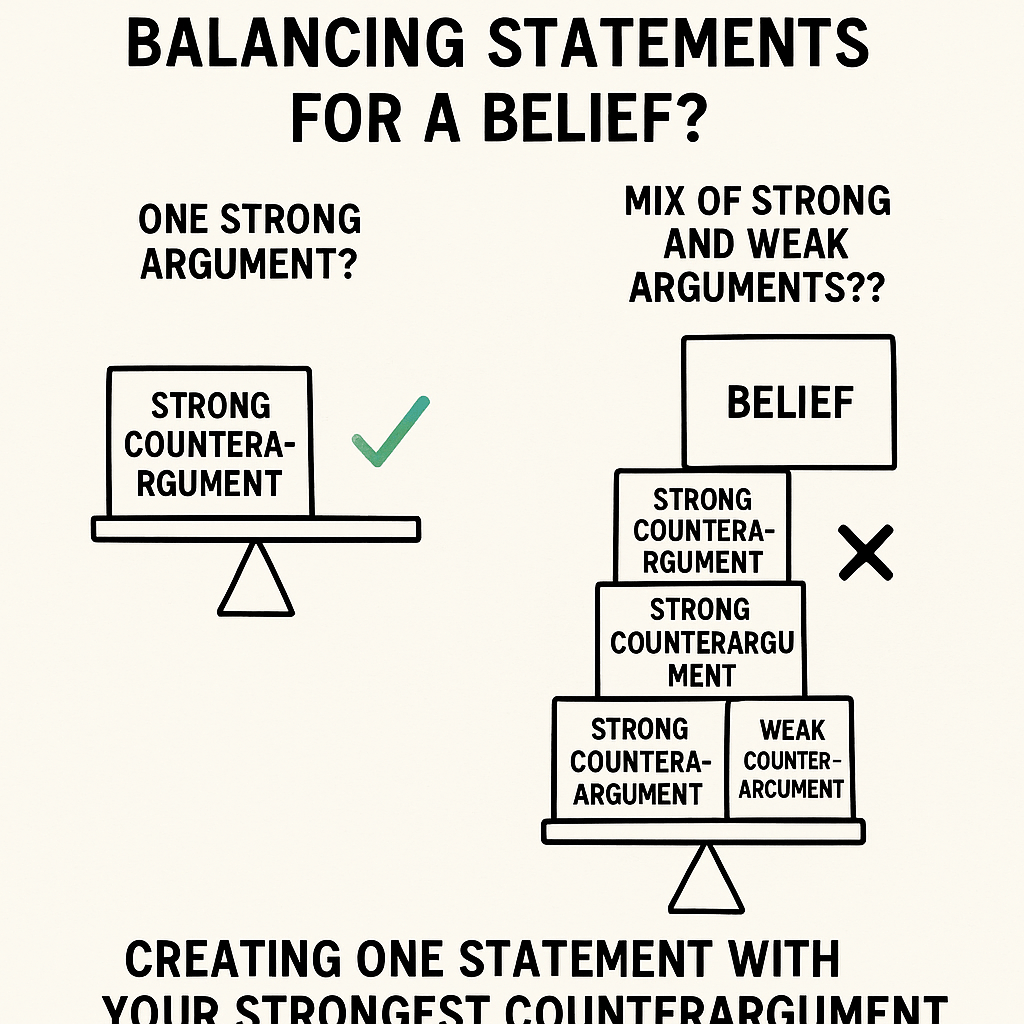
The answer: you can prepare several, but each one should stand on its own, built around a single strongest argument.

Why You Should Focus on One Strong Argument per Statement

Psychological research into persuasion shows that one strong argument (let’s call it argument A) is usually more effective than a list of argument A plus several weaker ones (B, C, etc.).

Although it might feel intuitive to pile on supporting reasons, studies show that this often dilutes the impact of the strongest point — a phenomenon known as the dilution effect.

In practice:

Adding weak arguments reduces the perceived strength of the strong one — people unconsciously “average out” the strength of the message.

So, instead of reinforcing your case, you might unintentionally weaken it.

How to Use This in Creating Balancing Thoughts

When challenging a belief, your goal is not to overwhelm it with quantity, but to pierce it with quality. That means:

✅ Do:

  • Write one clear and compelling balancing statement based on your most powerful counterargument.
  • If you discover other completely different strong arguments, create separate statements for each.

❌ Avoid:

  • Mixing in weaker or redundant arguments just to “say more.”
  • Turning a strong statement into a diluted list.

Example

Limiting belief: “I can’t succeed because I’m too disorganized.”

Weak version:

“I’ve had some moments of being organized, and my friends say I’m smart, and I once made a to-do list that helped.”

This tries to do too much — and ends up sounding unconvincing.

Strong version:

“I’ve successfully completed big projects at work by using a simple weekly planning system — so I know I can function productively when I follow that process.”

One clear, powerful fact. It hits harder.

What If You Have Multiple Strong Points?

Perfect. Then write multiple separate balancing statements — each one with its own “A-level” reasoning. Keep them focused and strong.

Remember: you’re building tools to shift your beliefs, not writing an essay. Each tool should be sharp and specific.

The Process

  1. List all arguments and evidence related to the belief.
  2. Identify the strongest ones — those that really speak to you.
  3. Craft one clear balancing statement for each top argument.
  4. Use them as needed, depending on context and what resonates most in the moment.

Summary

  • You can write several balancing statements for one belief — but each should center on only one powerful argument.
  • Never combine strong and weak points in the same statement — it weakens the overall impact.
  • Your mind responds better to clarity and strength than to clutter and quantity.

Quality over quantity — always.