Dlaczego Twoje sukcesy mogą Cię sabotować – i jak tego uniknąć

Wyobraź sobie, że właśnie wykonałeś kawał dobrej roboty. Trzymałeś się diety przez cały tydzień, nie opuściłeś ani jednego treningu albo wytrwałeś kolejny dzień bez nałogu. Czujesz się dumny – i słusznie. Ale potem… pozwalasz sobie „na małą nagrodę”. Czekoladowy batonik, dzień lenistwa, albo jedna „niewinna” fajka. Brzmi znajomo?

Nie jesteś sam. To nie słabość – to efekt moralnego upoważnienia. Psychologiczna pułapka, która sprawia, że przeszły sukces staje się pretekstem do bieżącego odstępstwa. Bo skoro już tak dobrze Ci idzie, to przecież „zasługujesz”…

Sukces jako pułapka

Badania pokazują, że gdy przypominasz sobie, że zachowałeś się wcześniej dobrze – np. byłeś hojny, zdrowo się odżywiałeś, wytrwałeś w postanowieniu – zaczynasz… ufać sobie za bardzo. A wtedy łatwiej sięgasz po coś, co sabotuje Twój cel.

➡ Grupa osób, która wierzyła, że bierze suplementy witaminowe – jadła gorzej i mniej ćwiczyła.
➡ Osoby, którym przypomniano, że kiedyś były hojne – teraz dawały mniej na cele charytatywne.
➡ Dietujący, którzy wspominali swoje dotychczasowe sukcesy – chętniej wybierali batonika zamiast jabłka.

Dlaczego tak się dzieje? Bo nasz mózg interpretuje przeszły sukces jako znak, że „już jesteśmy okej”. A skoro tak – to możemy trochę odpuścić. Tylko że to właśnie ten moment prowadzi nas z powrotem na początek drogi.

Jak odwrócić efekt moralnego upoważnienia?

Dobra wiadomość? Można to całkowicie zneutralizować. Wystarczy jedna zmiana w myśleniu:

👉 Zawsze przypominaj sobie „DLACZEGO” zacząłeś dane postanowienie, dlaczego chcesz osiągnąć daną rzecz, co było twoimi motywatorami.

Kiedy wspominasz swój sukces, nie traktuj go jak „kawał dobrze wykonanej roboty”, tylko jako dowód Twojego zaangażowania w coś większego. To tylko krok na dłuższej drodze – nie cel sam w sobie.

Zamiast:

„Dobrze mi idzie, mogę sobie pozwolić na wyjątek”
Pomyśl:
„Dobrze mi idzie, bo naprawdę mi zależy. Ten sukces przypomina mi, jak bardzo chcę dojść do celu”.

To zmienia wszystko.

Nie testuj siebie. Przypomnij sobie, ile już zrobiłeś

Częsty błąd na etapie krystalizacji postanowienia to zbyt duża pewność siebie. Myślimy:

„Już to pokonałem, mogę się przetestować, zobaczyć, czy nadal mam kontrolę.”

Ale to nie test – to wymówka. A najgorsze, że często zapominamy, ile wysiłku kosztowało nas dojście tu, gdzie jesteśmy. Przypomnij sobie:

  • Ile razy musiałeś się przełamać?
  • Ilu pokusom się oparłeś?
  • Ile dni wytrwałeś mimo braku motywacji?

Nie pozwól, by Twoje obecne „normalne” samopoczucie przyćmiło ogrom pracy, który już wykonałeś.

Motywacja „OD”, czyli czego chcesz uniknąć

Na początku drogi myślisz o tym, co chcesz zyskać – lepsze zdrowie, więcej energii, pewność siebie. Ale z czasem się do tego przyzwyczajasz. To staje się normą. I wtedy pojawia się pokusa odpuszczenia.

Właśnie wtedy warto zmienić perspektywę. Zamiast pytać:

„Co chcę osiągnąć?”
Zapytaj:
„Czego NIE chcę przeżywać znowu?”

Nie chcesz wracać do:

  • braku energii,
  • frustracji,
  • wyrzutów sumienia,
  • tego uczucia zawodu wobec siebie.

Ta motywacja od staje się Twoją kotwicą, gdy fale motywacji „do” zaczynają słabnąć.

Zamiast pułapki – trampolina

Zamiast pozwalać sukcesowi Cię rozpraszać, pozwól mu Cię wzmocnić.

  • Wspominaj swoje sukcesy.
  • Od razu przypomnij sobie, DLACZEGO zacząłeś.
  • Nie testuj siebie – doceniaj drogę, którą przeszedłeś.
  • Gdy spada motywacja, przypomnij sobie, czego chcesz uniknąć.

Twoje postanowienie to nie test siły woli. To proces stawania się kimś, kto żyje w zgodzie z własnymi wartościami.

I najważniejsze: już to robisz. Każdy dzień, każda decyzja, każda odmówiona pokusa – to dowód.
How to Jump Over the Wall of Resistance and Start Taking Action with Ease 🧱

Have you ever felt this? You’ve got a goal, even some motivation—but when the moment comes to start, something invisible holds you back. You want to act, but instead, you end up procrastinating, getting distracted, or overthinking.

That’s not laziness—it’s something deeper. It’s called accumulated resistance. It’s that uncomfortable mental weight that builds up right before you take action. A mix of discomfort, excuses, tension, and inner pressure.

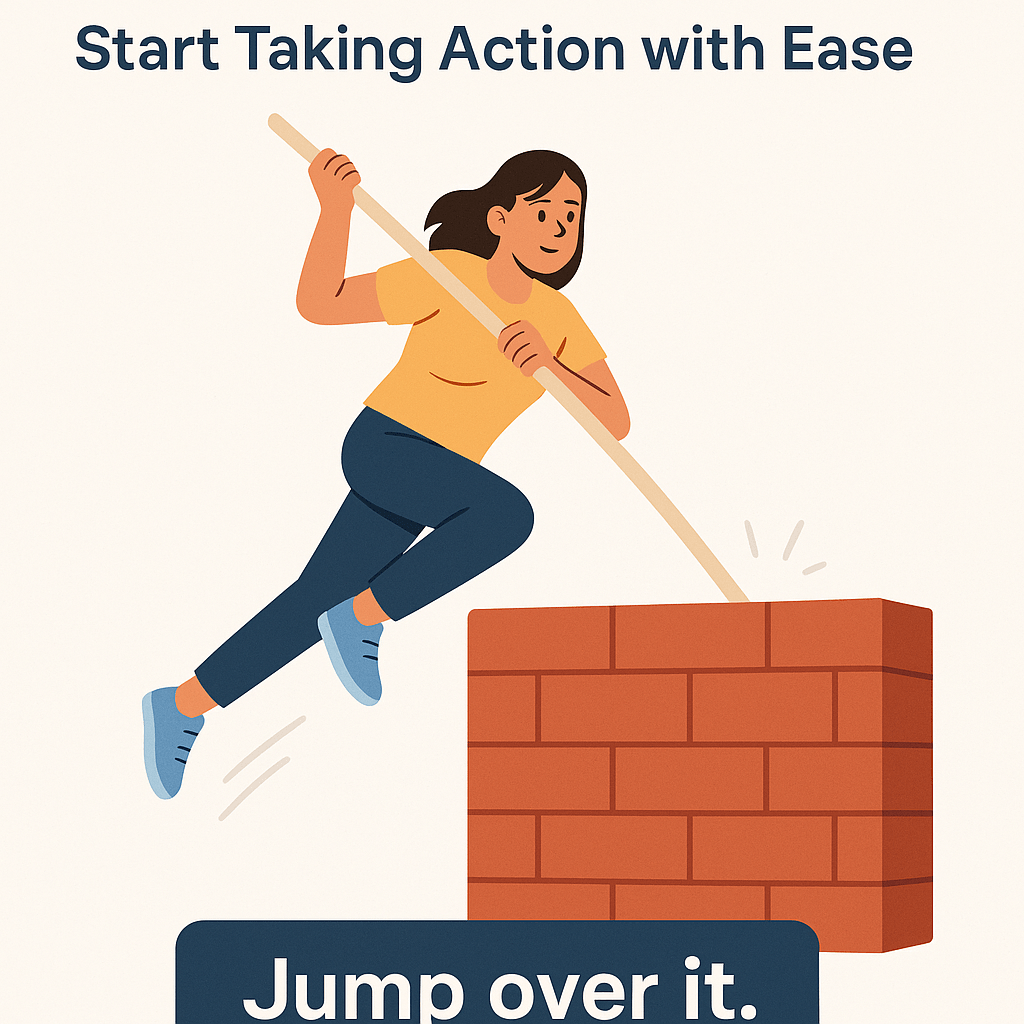
It feels like hitting a brick wall that separates intention from action. 🧱 And if you try to break through it by force, you’ll just drain your mental energy before you’ve even started.

What Builds Up This Wall of Resistance?

  • Doubts like “What if I fail?” or “What if I’m not ready?”
  • Fear of criticism, failure—or even success
  • Low physical or mental energy
  • The temptation to do something easier or more enjoyable
  • Perfectionism or overwhelm 🙈

Most of the time, this all happens right before you start. But here’s the key: that resistance drops significantly or disappears altogether once you begin.

So What Can You Do?

Don’t fight it. Don’t waste your energy smashing through that wall. Instead, jump over it. 🦘

Imagine using a long pole to vault over the wall—quickly and effortlessly. That pole is called the starting block. 🏁

What’s a Starting Block?

It’s a tiny, specific, repeatable action that shifts you into motion. It creates tunnel focus—you stop thinking about the whole task and concentrate on one small, frictionless move. 🎯

Examples:

  • 🧽 Cleaning → putting on rubber gloves
  • 💻 Laptop work → closing irrelevant tabs and opening the ones you need
  • 📚 Studying → opening your book to the right page
  • 🏋️‍♀️ Working out → putting on gym clothes

But Motivation Still Isn’t Action… 🔗 So Let’s Add the linked techniques

Even if you feel ready and have your starting block defined, you still need to make a micro-decision that turns motivation into motion. That’s where the linking technique comes in.

There are two simple versions of this technique:

1. The 5-Second Now Formula ⏱️

Use this when you can start right now.

Say to yourself, either out loud or in your mind:

“I’m going to [insert your starting block] right now.”

Then start counting backward:

“5… 4… 3… 2… 1…”

👉 You must physically begin during the countdown. Get up. Move. Do it.
If you don’t, you’ll feel a small sense of discomfort—because you just broke your word to yourself. That’s the emotional cue that builds self-discipline.

📌 Example:
You’re sitting on the couch watching Netflix, but your starting block is “sit at the desk and open my book.”
Say: “I’m going to sit at the desk and open my book. 5… 4… 3…” — start moving.

2. The Future Link Formula 🔮

Use this when you can’t start right now, but you know when you will.

Say:

“As soon as I [trigger event], I’ll [starting block].”

📌 Example:
“As soon as I get home from work, I’ll sit at my desk and open my book.”

No countdown here—just a clear mental contract for a future trigger. 🎯

Why Does This Work So Well? ⚙️

Because it links intention to action in a specific, timed, and non-negotiable way.
You’re not waiting for motivation—you’re giving your brain clear instructions and a deadline.

Used alone, it helps.
Used together with the starting block, it’s magic. ✨

In Summary 📝

  1. Resistance is real—but it drops after you start.
  2. Use a starting block to trick your brain into effortless tunnel focus.
  3. Use the linking technique to go from “I want to” to “I’m doing it.”
  4. Combine both to leap over resistance like a pro.

You don’t need to force your way through the wall.
Just jump over it.

Summary # 2

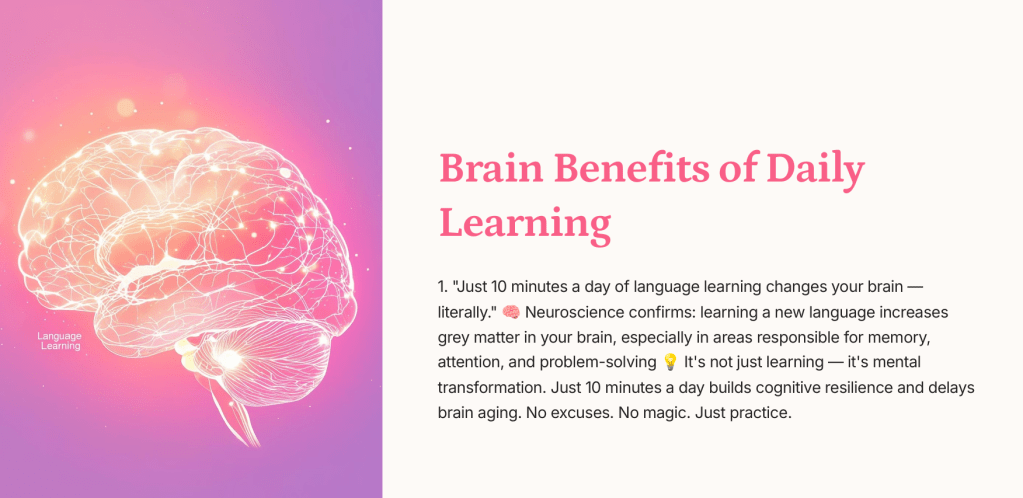
1. “Just 10 minutes a day of language learning changes your brain — literally.”

🧠 Neuroscience confirms: learning a new language increases grey matter in your brain, especially in areas responsible for memory, attention, and problem-solving (University College London study).
💡 It’s not just learning — it’s mental transformation. Just 10 minutes a day builds cognitive resilience and delays brain aging.
No excuses. No magic. Just practice.

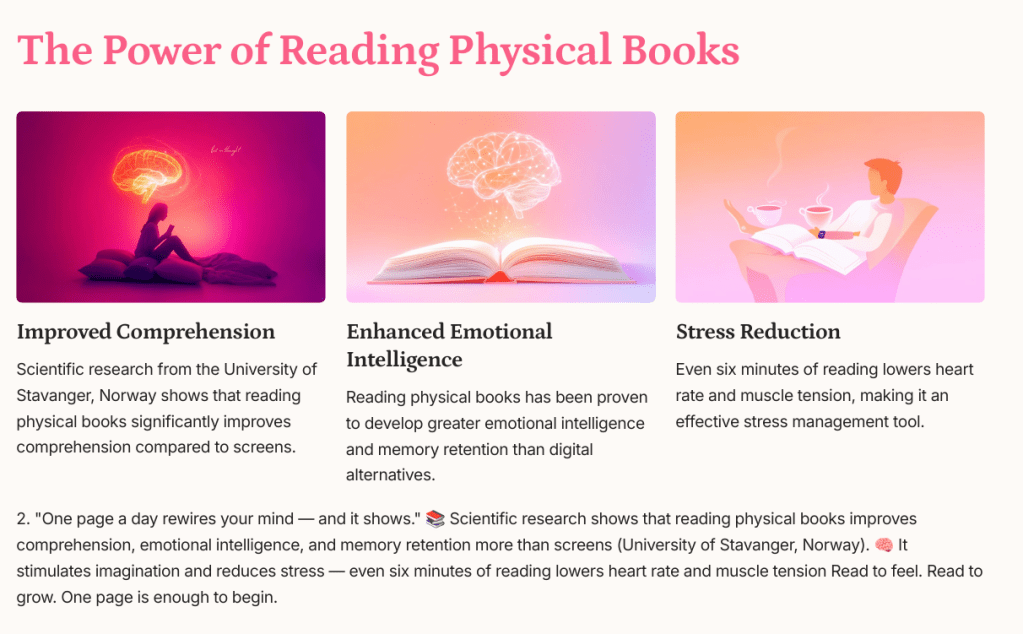
2. “One page a day rewires your mind — and it shows.”

📚 Scientific research shows that reading physical books improves comprehension, emotional intelligence, and memory retention more than screens (University of Stavanger, Norway).
🧠 It stimulates imagination and reduces stress — even six minutes of reading lowers heart rate and muscle tension (University of Sussex).
Read to feel. Read to grow. One page is enough to begin.

Jak wzmocnić siłę swojego najważniejszego motywatora

🎯 CEL:

Wzmocnić siłę swojego najważniejszego motywatora przy pomocy obrazu i hasła emocjonalnego – tak, by działał na Ciebie natychmiast i intuicyjnie, kiedy zaczynasz tracić motywację.

🧠 DLACZEGO OBRAZ?

  • Jeden odpowiednio dobrany obraz wywołujący silne emocje działa mocniej niż słowa.
  • Obraz nie powinien tylko reprezentować motywatora, ale wzbudzać w Tobie emocje, które chcesz poczuć (np. spokój, podziw, determinację, miłość).
  • Szukaj obrazów, które najbardziej Cię poruszają, nawet jeśli nie są „ładne” – mają działać, nie ozdabiać.

🧩 JAK WYBRAĆ OBRAZ I HASŁO MOTYWACYJNE:

  1. Wybierz 1–2 najważniejsze motywatory z drzewa motywacji.
  2. Szukaj obrazu, który:
    • wywołuje w Tobie konkretne emocje związane z tym motywatorem,
    • nie musi być symboliczny – ma być emocjonalny.
    • przykład: jeśli motywatorem jest „bycie podziwianym podczas wystąpień”, to obraz skupionych twarzy widzów z błyskiem w oczach będzie skuteczniejszy niż zdjęcie sceny.
  3. Stwórz hasło, które:
    • porusza Cię osobiście (np. „Nie chcę, by ktoś musiał to przeżyć znów”),
    • może nawiązywać do emocji negatywnych (np. upokorzenie w szkole) pod warunkiem, że motywuje Cię to do pozytywnego działania.

🧪 Zapisywanie Twoich Motywacji:

  • To miejsce, w którym zapisujesz obraz i hasło dla swoich motywatorów.
  • Możesz tam eksperymentować: zmieniać obrazy, hasła, obserwować, co działa najlepiej – jak naukowiec testujący formułę.
  • Z czasem możesz dodać więcej motywatorów, nie musisz ograniczać się do dwóch.

🧲 Kiedy korzystać z miejsca gdzie masz zapisane swoje motywacje?

👉 Za każdym razem, gdy:

  • czujesz niechęć do działania,
  • pojawia się presja zewnętrzna („muszę, bo mnie zwolnią”),
  • dominują myśli lękowe (kij zamiast marchewki).

Wtedy:

  1. Przywołaj obraz i hasło.
  2. Poczuj emocje, które mają Cię „pociągnąć”.
  3. Jeśli Twój motywator zawiera wizję sukcesu – zastosuj „trampolinę motywacyjną”:

🪜 Technika Trampoliny Motywacyjnej:

Kiedy Twój motywator to przyjemna wizja przyszłości (np. dzieci na rajskich wakacjach):

  1. Zanurz się w tej wizji – poczuj ją zmysłowo.
  2. Uświadom sobie: „To się nie wydarzy, jeśli nie zrobię teraz tego, co mam zrobić.”

Ten kontrast przywraca energię do działania.

✅ Podsumowanie:

  • Dobierz do swoich motywatorów emocjonalnie poruszające obrazy i hasła.
  • Zapisz je
  • Używaj ich w chwilach zwątpienia, stresu lub spadku energii.
  • Eksperymentuj – szukaj tego, co działa na Ciebie najmocniej.
  • Stosuj technikę trampoliny, by wizja sukcesu wzmacniała, a nie osłabiała Twoją motywację.

How to Find Your Deep Motivator? Step by Step with the Motivation Tree

Why do we pursue some goals easily, while others we abandon after just a few days? The answer often lies in motivation—but not the superficial, fleeting, or external kind. It’s about deep motivators that align with our values, beliefs, and needs. Only they have the power to build lasting, internal motivation.

1. First Step: Recognize Your Inner Motivation

Before you start building habits, ask yourself: Why do I even want to do this?
It’s not a cliché—this is the first and most important step toward change.
Example? I want to learn Swedish. But if I don’t want to give up after a week, I need to find real reasons that drive me—my personal benefits, not someone else’s expectations or generic templates.

2. Choose the Activity You Want to Build Motivation For

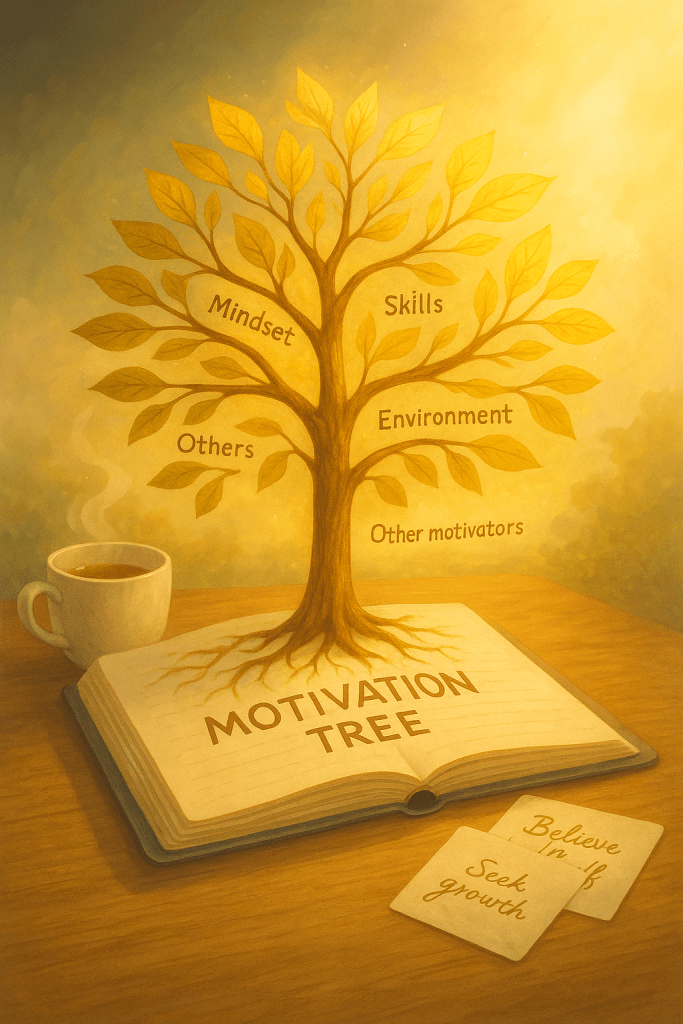
For me, it’s learning Swedish regularly. In an app (or on paper, in a notebook, wherever I want), I create my own “motivation tree” – a place where I will write down step by step what this activity gives me in various areas of my life.

3. The Contexts in the Motivation Tree – Where to Look for Benefits?

The motivation tree is about one question:
“What does this give me?” Why do I really want to do this?
Here are the contexts that help uncover what’s often hidden:

a) Mindset (Psychika)

How will this activity affect my emotions, self-confidence, sense of worth?
👉 For example: greater confidence during conversations, inner calm, sense of effectiveness, pride, independence.

b) Skills & Competencies

What skills will I gain?
👉 Advanced knowledge of Swedish, better communication at work and in personal life, improved memory, focus, and creativity.

c) Environment & System

Impact on my surroundings, workplace, the world.
d) Others

How will this affect the people around me?
👉 I could understand my loved one. I will inspire my loved ones to learn other languages, become a support and authority figure for someone.

e) Spirituality

Does this activity bring me closer to something greater—my mission, purpose, inner fulfillment?
👉 At first, it was hard to see. But then I realized that striving to become the best version of myself, fulfilling my potential, truly moves me.

f) Other Motivators (social, material, prestige-related)

What else will I gain?
👉 Understanding Swedish media, politics and humor, more opportunities to meet interesting people abroad.

4. You Don’t Have to Fill It All – You’re Looking for Clues

This is not about completing every box in your tree.
Sometimes, just a few strongest motivators—those that really move you—are enough.
A motivator can fit more than one context, and that’s totally fine.
It’s not about perfection. It’s about truth—digging deep to uncover what genuinely drives you.

5. Goal: Find the Deep Motivator You Control—Not Others

This motivator—personal, internal, strong—will be the fuel that keeps you going regardless of outside conditions.
It’s not a “stick,” not a “carrot”—it’s your inner why. And it’s always with you.

Your Turn

🔸 Choose one activity you want to build stronger motivation for.
🔸 Fill out the motivation tree based on the steps above—be honest with yourself, do it in silence and calm, just for you. You’re answering why you truly want to start, change, or stop doing something.
🔸 Pay attention to what shows up in different contexts—those might be the clues to your deep motivator. And that’s exactly what you need for this activity to become a part of who you are, not something you do out of obligation or fear of loss.

The goal is to shift from “I must” to:
👉 “I want to.”
👉 “This is who I am.”
👉 “This activity is part of me.” 💛

In the next part, we’ll dive deeper into your motivator(s).
But for now—just start exploring.

Good luck! Marlena 💛💛💛