Współ-inteligencja. Człowiek + AI = nowy sposób myślenia

1. Główna idea: „Współ-inteligencja”

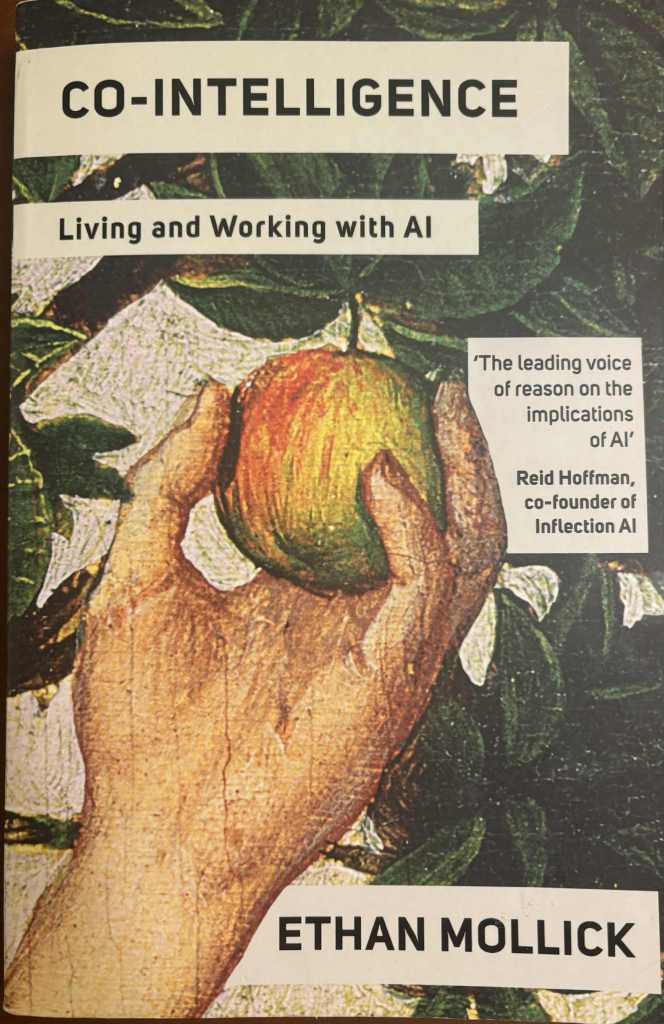
Ethan Mollick w swojej książce Co-Intelligence: Living and Working with AI proponuje nie patrzeć na AI (sztuczną inteligencję) jako na rywala, ale jako na partnera w myśleniu i działaniu — stąd pojęcie co-intelligence (współinteligencja).
Kilka kluczowych punktów:

  • Współczesne systemy generatywnej AI, zwłaszcza modele językowe („large language models” – LLM), działają w sposób niezwykły: przetwarzają ogromne zbiory tekstów, uczą się wzorców językowych i pomagają nam generować nowe teksty, pomysły, analizy.
  • AI to jak „obcy mózg” („alien mind”) – coś, co nie myśli jak człowiek, ale może z nami współpracować. Tę metaforę Mollick wykorzystuje, by podkreślić: musimy nauczyć się żyć i działać z tym „obcym”
  • W efekcie chodzi o stworzenie nowego stylu pracy i uczenia: człowiek + maszyna, każdy wnosi to, co najlepiej potrafi. AI przejmuje pewne zadania, człowiek trzyma stery, nadzoruje, decyduje.
Uczeń-kucharz: jak AI naprawdę się uczy

  • Mollick używa genialnej metafory: uczeń-kucharz.
    Wyobraź sobie młodego kucharza, który chce zostać mistrzem.
    Ma spiżarnię pełną składników (czyli weights – wagi, których w ChatGPT jest 175 miliardów), ale kompletnie nie wie, jak ich używać.
  • Przed nim miliony przepisów (teksty z Internetu, książki, artykuły). Uczeń zaczyna próbować.
    Miesza, łączy, myli się, poprawia. Z czasem odkrywa, że jabłka pasują do cynamonu, a kmin do kawy już nie.

Z każdą próbą jego spiżarnia staje się bardziej uporządkowana, aż pewnego dnia zaczyna gotować dania, które naprawdę mają smak.

  • To właśnie etap pre-trainingu — uczenia bez nadzoru człowieka (unsupervised learning).
    AI obserwuje wzorce, zależności, rytm języka, aż zaczyna pisać spójnie i naturalnie.
    Ale uwaga: to wciąż uczeń bez zrozumienia. Umie powtórzyć przepisy, ale nie wie, dlaczego smakują dobrze.

Pre-training i jego cienie

  • W tej fazie AI pochłania ogromne ilości tekstów — publiczne, naukowe, czasem również te objęte prawem autorskim.
    Nie kopiuje ich, lecz przekształca w matematyczne wzorce — tzw. wagi, które mówią jej, jak prawdopodobne jest, że słowa wystąpią razem.
    To tworzy nową, trudną granicę między nauką a prawem, inspiracją a własnością.
  • Mollick pisze, że dobre dane mogą się skończyć już za kilka lat. Firmy będą musiały nauczyć AI uczyć się z mniejszej ilości treści — albo tworzyć dane samodzielnie.
  • I tu pojawia się paradoks: AI uczy się z ludzkiej kultury, ale nie tworzy jej znaczeń. Jest jak papuga, która zbudowała bibliotekę cytatów, ale nigdy nie przeżyła ani jednej emocji z tych książek.

Fine-tuning — lekcje z ludzkiego feedbacku

  • Kiedy AI już „ugotuje” danie, człowiek musi je spróbować.
    To etap fine-tuningu — czyli uczenia z pomocą ludzi.
    Eksperci czytają odpowiedzi AI, oceniają je („👍” lub „👎”), a model uczy się, jakie formy i tony są pożądane.

To proces zwany RLHF — Reinforcement Learning from Human Feedback.

  • W ten sposób AI zaczyna nabierać smaku – rozumieć, że nie każda odpowiedź dobra statystycznie jest dobra społecznie.
    Że można mówić poprawnie, ale nieodpowiedzialnie.
    Że nie wszystko, co się da wygenerować, powinno zostać wypowiedziane.

2. Cztery zasady współ-inteligencji

Mollick przedstawia cztery podstawowe reguły, które pomagają efektywnie współpracować z AI.

  1. Zawsze zaproś AI do stołu („Always invite AI to the table”). Eksperymentuj, sprawdzaj: „czy w tym zadaniu AI może pomóc?” — bo jeśli nie spróbujesz, nie poznasz granic (tzw. „jagged frontier”).
  2. Bądź człowiekiem w pętli („Be the human in the loop”). Oznacza to: nie odchodź od nadzoru — AI może sugerować, ale decyzje i odpowiedzialność są po stronie człowieka.
  3. Traktuj AI jak osobę (ale jasno zakomunikuj, jaką osobą) („Treat AI like a person — but tell it what kind of person it is”). Czyli: ustaw kontekst, persona, rolę dla AI; dzięki temu efekty mogą być lepsze.
  4. Zakładaj, że to najgorsze AI jakie kiedykolwiek użyjesz („Assume this is the worst AI you’ll ever use”). Technologia rozwija się błyskawicznie — to, co dziś jest najnowsze, jutro może być przestarzałe.

Te zasady warto pamiętać szczególnie w edukacji, w pracy, w uczeniu się — bo pomagają uniknąć fałszywego przekonania, że AI zastąpi człowieka lub że wystarczy „klikać i patrzeć”.

3. Uczenie się, edukacja i rola AI

  • Mollick podkreśla, że podstawowe umiejętności i wiedza faktograficzna wciąż są kluczowe — zanim zaczniemy korzystać z AI, powinniśmy mieć solidne fundamenty. Bez nich trudno zauważyć wzorce, wyłapać błędy, zrozumieć kontekst.
  • W edukacji AI może pełnić role: tutora (indywidualna pomoc, dostosowanie się do ucznia) i trenera/coacha (wsparcie w rozwoju umiejętności, analiza, feedback) — Mollick omawia te role jako część części drugiej książki.
  • Przykład: architekt-student, który co tydzień spotyka się z ekspertem vs. drugi student, który po każdym projekcie otrzymuje natychmiastowy feedback od AI — ten drugi może robić więcej iteracji, szybciej uczyć się.
  • W edukacji tradycyjny model (nauczyciel przekazuje, uczeń odbiera) musi ewoluować. AI może przejąć część pracy — np. dostarczanie materiału, powtórki — a nauczyciel może skupić się na tym, co najludzkie: wyjaśnianie, prowokowanie pytań, mentoring.

Gdzie AI może mieć ograniczenia w edukacji

  • AI mogą halucynować: generować odpowiedzi, które brzmią przekonująco, ale są nieprawdziwe — więc uczniowie muszą nauczyć się weryfikować, krytycznie myśleć.
  • AI nie zastąpi całkowicie ludzkiego nauczyciela: feedback, emocje, relacje, motywowanie — te elementy pozostają silnie ludzkie. Mollick sugeruje, że nauczyciel-mentor jeszcze bardziej zyskuje na znaczeniu.
  • Uczenie „jak pisać zapytania (prompt-engineering)” to nie wystarczy. Książka zauważa, że kluczowe jest nie tylko umiejętność „składania promptu”, ale rozwijanie krytycznego myślenia, świadomości zadania i kontekstu.

4. Różne role AI

Mollick wyróżnia kilka „persona” AI: jaką może pełnić rolę w naszym życiu zawodowym, edukacyjnym, twórczym.

  • AI jako osoba („AI as a person”) — czyli kiedy przypisujemy mu cechy, rolę eksperta, wspólnika. Użyteczne, jeśli wiemy, jak ją skonfigurować.
  • AI jako kreatywna siła („AI as a creative”) — generowanie pomysłów, twórcze kombinacje, wsparcie w procesie tworzenia. Jednocześnie: nie wszystko, co wygeneruje, będzie wartościowe.
  • AI jako współpracownik („AI as a coworker”) — w pracy: automatyzacja pewnych zadań, wsparcie analityczne, szybkie wersje robocze, ale człowiek dalej ma przewagę w wyborze, kierowaniu, ocenianiu.
  • AI jako tutor („AI as a tutor”) — w edukacji: zadania dostosowane, feedback, wsparcie indywidualne; ale z zastrzeżeniem kontrolowania jakości i nie oddawania całej interakcji maszynie.
  • AI jako coach („AI as a coach”) — w rozwoju umiejętności, w karierze: co mogłoby pójść źle? co mogę zrobić lepiej? – AI może stawiać pytania, proponować scenariusze, zmuszać do refleksji.

5. Wagi: co wynika dla uczenia się, edukacji, rozwoju?

  • Uczenie się w erze AI oznacza przejście od pamiętania do rozumienia i tworzenia — skoro AI może pomagać w generowaniu faktów, to my musimy skupić się na umiejętnościach wyższego rzędu: krytycznym myśleniu, dyskusji, kreatywności.
  • Edukacja powinna uwzględniać integrację AI w procesie, nie tylko je blokować. Uczniowie powinni uczyć się „jak współpracować z AI”, a nie tylko „jak go unikać”.
  • Nauczyciele i trenerzy powinni stać się bardziej projektantami procesów uczenia się, mniej tylko przekazującymi wiedzę, a bardziej umożliwiającymi współdziałanie człowieka i maszyny.
  • W rozwoju zawodowym: osoby, które nauczą się wykorzystywać AI jako współpracownika, będą miały przewagę — ale nadal kluczowe pozostaje, by człowiek pozostał w roli decyzjodawcy, kreatora, nadzorcy.
  • Trzeba być świadomym ograniczeń AI — czyli że AI może wprowadzać błędy, może być „za dobre”, popaść w pułapkę automatyzacji bez refleksji — odbierając nam to, co najcenniejsze: ludzką perspektywę.

6. Gdzie AI „nie jest dobre” – czyli ograniczenia AI

  • AI często halucynuje — generuje błędne lub zmanipulowane informacje, bo nie „rozumie” świata, tylko przewiduje słowa.
  • AI może być nadmiernie pewne siebie — brzmi „mądrze”, ale nie zawsze jest to prawda. Wymaga więc weryfikacji przez człowieka.
  • AI nie ma świadomości, wartości, intencji — choć może symulować osobowość, to jednak nie jest człowiekiem. Trzeba uważać, by nie nadawać mu cech, których nie ma.
  • AI nie zastąpi w pełni ludzkich relacji, motywacji, intuicji — w edukacji oznacza to: nie redukujemy nauczyciela do maszyny; nie likwidujemy rozmowy, zrozumienia, wspólnego procesu.
  • AI może zmniejszyć różnicę między ekspertami a laikami — co z jednej strony jest szansą, ale z drugiej stawia pytania o wartość i odrębność wysokich kompetencji.

7. Podsumowanie

W erze generatywnej AI największą przewagą człowieka będzie to, co człowiecze – ciekawość, krytyczne myślenie, etyka, tworzenie znaczenia. A AI jest partnerem, który może nam pomóc szybciej dojść dalej — pod warunkiem, że my nadal prowadzimy, decydujemy i nadzorujemy.

Uczmy się nie tylko zapytania (jak „promptować”), ale jak myśleć, jak oceniać, jak współdziałać z AI – bo to współ-inteligencja będzie dominującą formą uczenia się i pracy.

4 timelines of implementation of the AI Act

On 10 June 2025, the European Parliament published an “At a Glance” factsheet detailing the implementation timeline of the EU Artificial Intelligence Act (AI Act), the world’s first comprehensive AI regulatory framework. The document sets out the Act’s history, purpose, core provisions and, above all, the staggered schedule by which its requirements will enter into force across the European Union.

Background and Purpose

The AI Act was formally adopted by the European Parliament on 13 March 2024 and published in the Official Journal on 12 July 2024, entering into force twenty days later (1 August 2024). It establishes a risk-based regulatory regime for AI systems, dividing them into “unacceptable,” “high,” “limited” and “minimal” risk categories. Its overarching goal is to ensure that AI deployed in the EU is safe, transparent and respectful of fundamental rights, while fostering innovation across the single market.

What the Factsheet Includes

The factsheet serves as a concise guide to:

  • History & Purpose: tracing the AI Act from proposal (April 2021) through political agreement (December 2023) to adoption and entry into force.
  • Key Provisions: outlining definitions (Chapter I), prohibited practices (Chapter II), high-risk system rules (Chapter III), general-purpose AI obligations (Chapter V) and enforcement mechanisms (Chapter IX).
  • Staggered Implementation Steps: detailing when each set of rules becomes applicable, culminating in full effectiveness by 2027.

Timeline of Implementation

  • 2 February 2025
    • Chapters I (general provisions) and II (prohibited AI practices) enter into force.
    • European Commission publishes non-binding guidelines on prohibited practices, clarifying, for instance, bans on social scoring, predictive policing and real-time biometric identification in public spaces.
  • 2 May 2025
    • Completion of the Code of Practice for General-Purpose AI (GPAI) models—covering large language models and other foundation models—either by industry consensus or, failing that, EU Commission intervention.
  • 2 August 2025
    • Entry into force of:
      • Designation of notified bodies and authorities for high-risk AI systems;
      • Obligations for GPAI model providers (governance, transparency, technical documentation, incident reporting);
      • Penalties regime (excluding fines specific to GPAI models);
      • Confidentiality requirements in post-market monitoring.
  • 2 February 2026
    • Commission issues guidelines on the classification rules for high-risk AI systems (Article 6), providing practical examples and clarifying Annex III criteria.
  • 2 August 2026
    • General application date for the remainder of the AI Act, including fines for GPAI model breaches and all high-risk system requirements in Annex III—except Article 6(1), which has a later deadline.
    • By this date, national authorities must be fully empowered to enforce the Act across Member States.
  • 2 August 2027
    • Entry into force of Article 6(1) (classification rules for high-risk AI systems embedded into regulated products) and Annex I obligations, marking the completion of the Act’s phased rollout.

Significance and Next Steps

This staggered approach balances the need for rapid prohibition of the most dangerous uses of AI with practical lead times for industry, regulators and Member States to adapt. Over the next two years, stakeholders must:

  1. Audit and Classify all AI systems and GPAI models in use (2 February 2025)
  2. Develop Compliance Frameworks: risk management, documentation, human-oversight mechanisms and AI literacy programs for personnel (2 February 2025)
  3. Engage with Guidelines: monitor Commission publications and standardization efforts (e.g., CEN-CENELEC harmonized standards due end-2025).

By 2 August 2027, the EU will have achieved a fully operational, risk-based AI regulatory regime, setting a global precedent for trustworthy AI governance.

Implementation timeline factsheet (PDF, European Parliament):
“The timeline of implementation of the AI Act” (At a Glance series, June 2025)
https://www.europarl.europa.eu/RegData/etudes/ATAG/2025/772906/EPRS_ATA%282025%29772906_EN.pdf

Why Deleting Your Chats In ChatGPT Might No Longer Work?

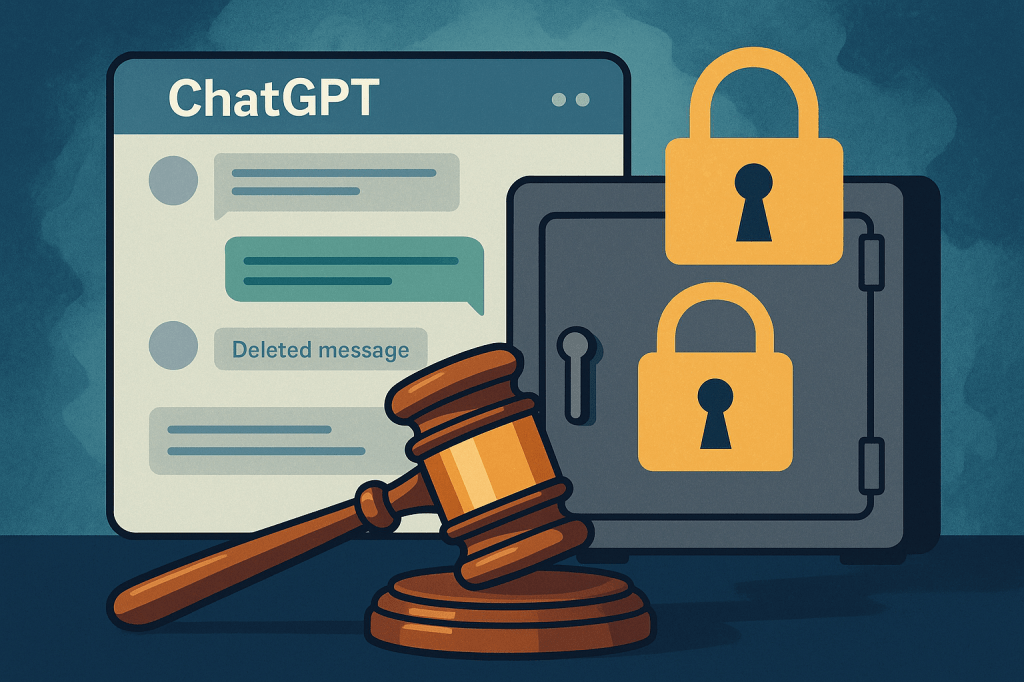
In mid-May 2025, U.S. Magistrate Judge Ona T. Wang granted The New York Times and fellow plaintiffs’ request to force OpenAI to preserve and segregate all output log data—including chats manually deleted or created as “temporary” sessions—until further notice. The news organizations argued that users skirting paywalls might delete incriminating conversations once aware of the lawsuit, thus destroying evidence

OpenAI immediately appealed, calling the order “unfounded” and a breach of its privacy promises to hundreds of millions of users across Free, Plus, Pro, and Team tiers

The Secret Reason the Court Said ‘Hold Everything’

Under Federal Rule of Civil Procedure 26, parties must preserve all potentially relevant information once litigation is reasonably anticipated. Judge Wang concluded that, absent a formal hold, deleted chats could vanish forever—even though OpenAI retains deleted conversations for 30 days under normal policy. The court faulted OpenAI for explaining only why segregation of user-deleted logs “would not” be feasible, rather than proving it “could not” be done.

What Every ChatGPT User Needs to Know About Their Data

OpenAI’s standard retention and deletion policy:

  • Free/Plus/Pro/Team: Chats saved and used to improve models unless users opt out; deleted conversations purged within 30 days.
  • Temporary Chats: Erased immediately upon closing.
  • Enterprise/Edu & ZDR API: Exempt from data retention by contract.

Under the court order, however, even deleted and temporary chats from non-ZDR accounts are locked under a legal hold—accessible only to a small, audited legal-security team for compliance.

How OpenAI Is Fighting to Protect Your Secrets

OpenAI’s motion to vacate argues:

  1. Privacy Breach: The hold “jettisons” users’ express deletion choices and conflicts with GDPR and other laws.
  2. No Evidence of Intentional Deletion: Plaintiffs offer only speculation, not concrete proof, that users have dumped logs to cover paywall-skirting.
  3. Engineering Nightmare: Complying would divert “months” of work and millions of dollars from core development.

The company has requested oral argument and stands ready to take the fight to District Court or even the Second Circuit if necessary.

A Timeline That Unfolds Like a Legal Thriller

DateEvent
Dec 27, 2023NYT sues OpenAI/Microsoft for training on paywalled articles without permission.
Apr 4, 2025MDL formed: Multiple suits consolidated (MDL 1:25-md-03143); core claims survive motions.
May 13, 2025Preservation Order: Judge Wang mandates hold on all logs, including deleted chats.
Jun 3, 2025OpenAI appeals: Files motion to vacate and requests oral argument.
Jun 6, 2025Public fallout: Reuters and The Verge report on OpenAI’s appeal and privacy concerns.

Where Do We Go From Here—and How It Affects You

  • Oral Argument: OpenAI will argue that the order is “overbroad” and unlawful.
  • Potential Appeals: If Magistrate Wang won’t budge, the next stop is District Judge Sidney Stein or the Second Circuit.
  • User Trust at Stake: Many users rely on deletion guarantees for private, sensitive chats—wedding vows, budgets, trade secrets. Indefinite holds could chill honest, open conversation.

Stay tuned: this clash between copyright law and privacy rights will shape not only ChatGPT’s future but the data-retention contours of every AI service you use.

Commission Publishes AI Literacy FAQs Under the EU AI Act: What You Need to Know

As of 2 February 2025, the EU Artificial Intelligence Act requires providers and deployers of AI systems to ensure that everyone involved—from in-house staff to external contractors and even end-users—possesses an appropriate level of AI literacy (art. 4 of AI Act). On 7 May 2025, the European Commission published a set of Frequently Asked Questions to clarify exactly what that means in practice.

What does article 4 of the AI Act provide?

Providers and deployers of AI systems should take measures to ensure a sufficient level of AI literacy of their staff and other persons dealing with the operation and use of AI systems on their behalf. They should do so by taking into account their technical knowledge, experience, education and training of the staff and other persons as well as the context the AI systems are to be used in and the persons on whom the AI systems are to be used.

Why AI Literacy Matters

Ensuring that people understand the AI tools they work with isn’t just about ticking a compliance box. Solid AI literacy underpins:

  • Transparency (Article 13): Staff need to grasp how AI systems arrive at decisions so they can explain outputs to regulators and stakeholders.
  • Human Oversight (Article 14): Users must be able to identify when something goes wrong, interpret AI recommendations responsibly, and intervene when necessary.

Who’s Covered?

The Commission makes clear that “AI literacy” isn’t limited to AI engineers. Obligations extend to:

  • Employees across all functions
  • Contractors and service providers supporting AI projects
  • Clients and end-users who operate the systems

The key requirement is that literacy be commensurate with each individual’s existing technical knowledge, experience, training and the context in which they engage with AI.

What’s Required—And What Isn’t

  • No mandatory exams or certifications. The Commission does not prescribe formal tests or assessment tools, but organizations must “take proactive measures” to verify that their people understand AI sufficiently.
  • Tailored training. Especially in high-risk sectors such as finance and healthcare, FAQs explicitly encourage bespoke modules on domain-specific AI use cases and tools (think ChatGPT-style assistants or medical-diagnostic algorithms).
  • Ongoing support. It’s not a one-and-done webinar. Firms should embed AI literacy into regular upskilling, performance reviews and tool-specific guides.

The EU AI Office’s Role

The new FAQs confirm that the forthcoming clarifications on Articles 8–25 of the AI Act will cover literacy obligations in depth. Meanwhile, the Commission itself has set an example by:

  1. Creating an internal AI portal—a “one-stop shop” for guidelines, training resources, events and news: For more details, please also see the guidelines on AI system definition. The guidelines on AI systems definition were published in addition to the Guidelines on prohibited artificial intelligence (AI) practices, as defined by the AI Act. 

A dedicated webpage on AI literacy and skills is under preparation.

  1. Segmenting learning packages for generalists, managers and specialist developers, with resources tagged as “essential,” “highly recommended,” or “recommended.”
  2. Curating tool-specific libraries—so every staff member can quickly find the right tutorial or best-practice guide for each AI application they use.

Next Steps for Your Organization

  1. Audit your people and roles. Map who interacts with AI systems and gauge their current proficiency.
  2. Design tiered learning pathways. Align content to both people’s functions (e.g. finance vs. operations) and risk levels in your industry.
  3. Build verification into processes. Even without formal tests, include quick self-assessments or manager-led check-ins to confirm comprehension.
  4. Stay tuned for the EU AI Office’s detailed rule-book on Articles 8–25, due later this year.

🔗 You can read the full set of AI literacy FAQs on the European Commission’s website: AI Literacy – Questions & Answers