

In mid-May 2025, U.S. Magistrate Judge Ona T. Wang granted The New York Times and fellow plaintiffs’ request to force OpenAI to preserve and segregate all output log data—including chats manually deleted or created as “temporary” sessions—until further notice. The news organizations argued that users skirting paywalls might delete incriminating conversations once aware of the lawsuit, thus destroying evidence
OpenAI immediately appealed, calling the order “unfounded” and a breach of its privacy promises to hundreds of millions of users across Free, Plus, Pro, and Team tiers
The Secret Reason the Court Said ‘Hold Everything’
Under Federal Rule of Civil Procedure 26, parties must preserve all potentially relevant information once litigation is reasonably anticipated. Judge Wang concluded that, absent a formal hold, deleted chats could vanish forever—even though OpenAI retains deleted conversations for 30 days under normal policy. The court faulted OpenAI for explaining only why segregation of user-deleted logs “would not” be feasible, rather than proving it “could not” be done.
What Every ChatGPT User Needs to Know About Their Data
OpenAI’s standard retention and deletion policy:
- Free/Plus/Pro/Team: Chats saved and used to improve models unless users opt out; deleted conversations purged within 30 days.
- Temporary Chats: Erased immediately upon closing.
- Enterprise/Edu & ZDR API: Exempt from data retention by contract.
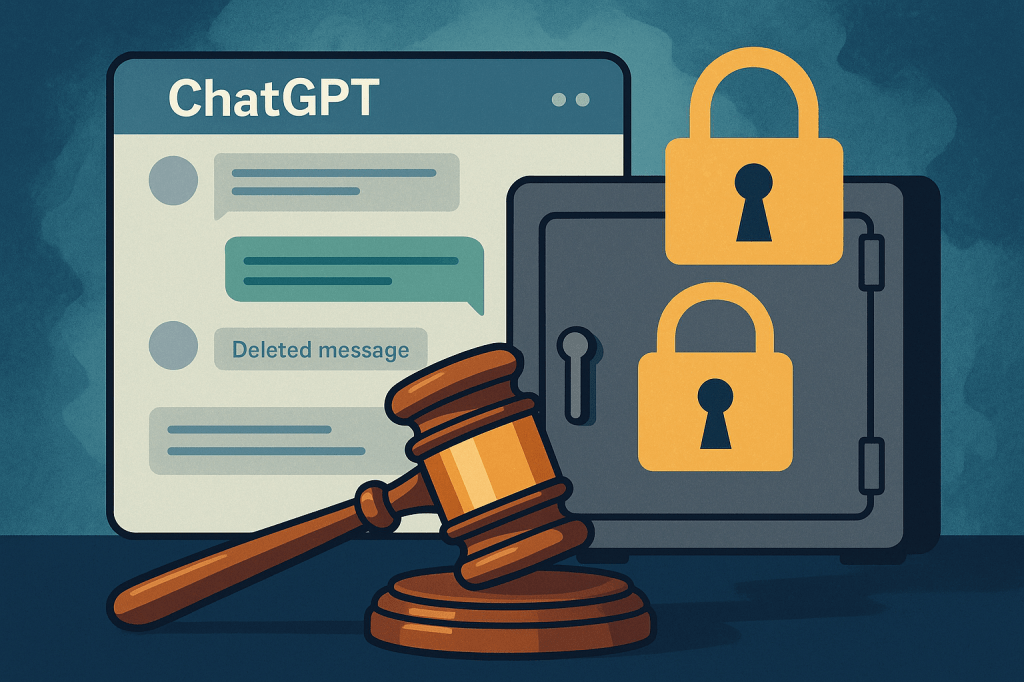
Under the court order, however, even deleted and temporary chats from non-ZDR accounts are locked under a legal hold—accessible only to a small, audited legal-security team for compliance.
How OpenAI Is Fighting to Protect Your Secrets
OpenAI’s motion to vacate argues:
- Privacy Breach: The hold “jettisons” users’ express deletion choices and conflicts with GDPR and other laws.
- No Evidence of Intentional Deletion: Plaintiffs offer only speculation, not concrete proof, that users have dumped logs to cover paywall-skirting.
- Engineering Nightmare: Complying would divert “months” of work and millions of dollars from core development.
The company has requested oral argument and stands ready to take the fight to District Court or even the Second Circuit if necessary.
A Timeline That Unfolds Like a Legal Thriller
| Date | Event |
| Dec 27, 2023 | NYT sues OpenAI/Microsoft for training on paywalled articles without permission. |
| Apr 4, 2025 | MDL formed: Multiple suits consolidated (MDL 1:25-md-03143); core claims survive motions. |
| May 13, 2025 | Preservation Order: Judge Wang mandates hold on all logs, including deleted chats. |
| Jun 3, 2025 | OpenAI appeals: Files motion to vacate and requests oral argument. |
| Jun 6, 2025 | Public fallout: Reuters and The Verge report on OpenAI’s appeal and privacy concerns. |
Where Do We Go From Here—and How It Affects You
- Oral Argument: OpenAI will argue that the order is “overbroad” and unlawful.
- Potential Appeals: If Magistrate Wang won’t budge, the next stop is District Judge Sidney Stein or the Second Circuit.
- User Trust at Stake: Many users rely on deletion guarantees for private, sensitive chats—wedding vows, budgets, trade secrets. Indefinite holds could chill honest, open conversation.
Stay tuned: this clash between copyright law and privacy rights will shape not only ChatGPT’s future but the data-retention contours of every AI service you use.
 Blog Marleny Wach