

Why Strategy Matters More Than Certainty Which Actually Doesn’t Exist!
The Tao of Trading by Simon Ree is one of those investing books that truly explains the mechanisms of the market and the decision-making behind investing.
It is a book about strategy, risk management, and staying consistent in your actions.
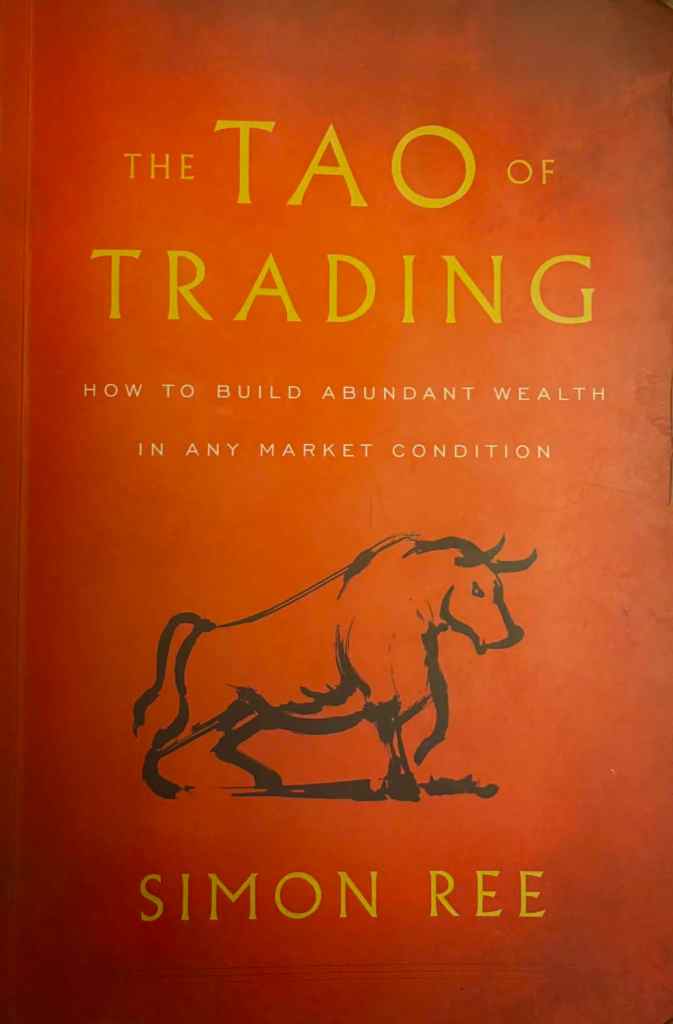
But at the same time, it is also a book about the person behind the screen — with their fears, hopes, beliefs, expectations, and reactions.
What I appreciate most about Simon is his perspective. It is clear that he writes as a practitioner, someone who knows the market not only from theory, but from real experience: decisions made under pressure, losses, risk, and the need to stay consistent despite changing market conditions.
His writing is simple, clear, and very practical. Even complex investing concepts become easier to understand and easier to apply in real life.
Managing Emotions, Expectations, and Decision-Making
The book shows how easy it is to act in the market under the influence of euphoria, FOMO, fear of loss, or the urge to quickly recover from previous mistakes. And it shows how important it is not to confuse an impulse with a decision, or emotion with a signal to act.
Simon also makes it very clear that successful investing is not about always being right, predicting the future, or perfectly timing every entry and exit.
As Simon emphasizes, it is not your job “to be right.”
It is not your job “to predict the future.”
It is not your job “to pick tops and bottoms.”
It is much more about process — having a plan, managing risk, staying disciplined, and acting consistently even when the market does not confirm your assumptions.
One of the strongest ideas in the book for me is that the result of a single trade does not define the investor. A loss is not failure — it is part of the process. What truly matters is how decisions are made, how risk is managed, and whether you can follow your strategy when emotions, pressure, or uncertainty appear.
The book strongly shows that the hardest work of an investor is not always about the market itself. Very often, it is about managing your own reactions.
The hardest part is often not learning something new. It is unlearning old habits — impulsiveness, the need for control, acting from euphoria or FOMO, or holding too tightly to an opinion when reality has already changed.

One quote Simon includes in the book captures this idea beautifully:
“A memory without emotional charge is called wisdom.”
— Dr. Joe Dispenza
Perhaps that is what growth as an investor is really about. Not avoiding mistakes, losses, or disappointment, but learning from them without carrying the emotional baggage forward. Turning experience into wisdom rather than fear.
Practical Lessons from Simon
Another important idea in the book is the value of inner peace and emotional balance. Simon argues that improving your sense of peace may do more for your trading results than endlessly searching for another indicator or strategy.
A quote he shares from Naval Ravikant stayed with me:
“Happiness is peace in motion. Peace is happiness at rest.”
— Naval Ravikant
The older I get, the more I appreciate the wisdom behind those words. Better decisions often come from clarity, patience, and emotional stability rather than constant action. This is true in investing, and perhaps even more true in life.
And that is probably why this book resonates beyond trading.
Because life works in a similar way:
we cannot predict everything,
we will not always be right,
we will make mistakes,
and not everything will go according to plan.
But we can learn how to respond — with more calm, awareness, and responsibility for our own decisions.
This is not a book about perfect investing.
It is a book about thinking clearly, acting consciously, managing risk, and staying consistent despite volatility, emotion, and pressure.
It also provides practical guidance that can be applied immediately — from creating and following a trading plan, to stepping back, breathing, and making decisions more deliberately and in line with a predefined strategy.
The final lesson I took away from this book is that knowledge alone is not enough. Reading, studying, and understanding are important, but they only become valuable when translated into action.
That idea is perfectly captured by another quote Simon includes near the end of the book:
“Whatever you can do, or dream you can, begin it. Boldness has genius, power, and magic in it.”
— Johann Wolfgang von Goethe
For me, that quote summarizes the spirit of the entire book. Have a plan. Manage risk. Stay consistent. Learn from mistakes. And most importantly — begin.
That is exactly why I would recommend reading The Tao of Trading by Simon Ree — not only if you invest, but also if you want to better understand your own reactions, decisions, and behavior under pressure.
Another aspect I appreciate about Simon’s work is his mission. Throughout the book, it becomes clear that his goal is not simply to teach people how to place trades, but to educate them on how to approach investing in a sustainable and disciplined way.
Simon openly acknowledges that trading is not easy and that most market participants never achieve consistent profitability. Many traders move through cycles of gains and losses, while others lose money altogether. His focus is not on selling the dream of quick riches, but on helping people understand the principles that separate occasional success from long-term consistency.
That is what makes this book different. Rather than promising shortcuts, Simon emphasizes risk management, discipline, process, and emotional control. His objective is to help traders build habits and systems that can improve their odds of achieving consistent results over time.
In a world where countless people enter the markets unprepared and end up losing significant amounts of money, Simon’s emphasis on education, personal responsibility, and continuous improvement feels both refreshing and necessary.

